
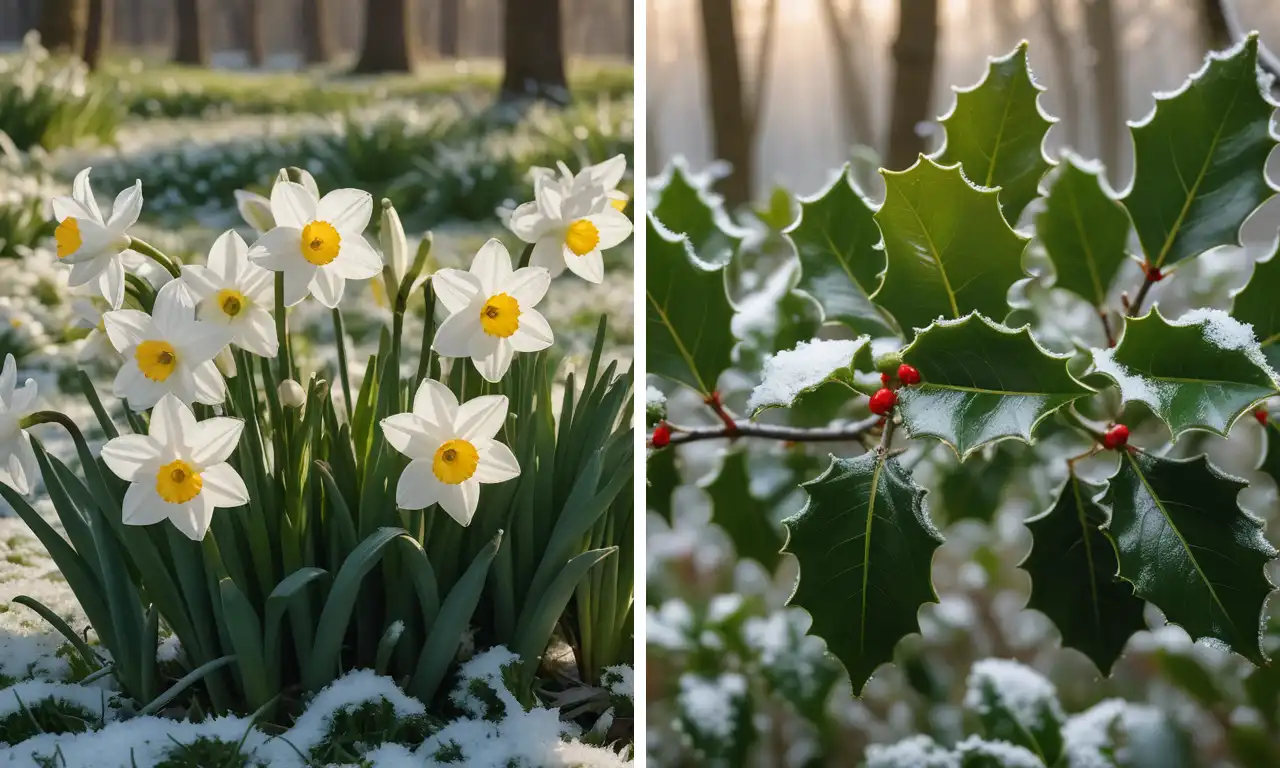
December brings winter’s arrival and festive holiday celebrations, offering those born this month two distinctive flowers that beautifully capture the season’s spirit. The December birth flower is shared by the delicate narcissus and the evergreen holly, each carrying deep symbolism and timeless charm. Together they represent resilience and renewal—holly standing strong through frost while narcissus promises fresh beginnings and good fortune. Their contrasting qualities highlight December’s balance of endurance, optimism, and hope, perfectly suited to birthdays during the joyful holiday season. These birth flowers of December connect seasonal beauty with cultural traditions, enriching meaningful celebrations with heritage that feels both timeless and uniquely personal.
Narcissus Birth Flower – Winter Renewal With Radiant Hope
History and Origins
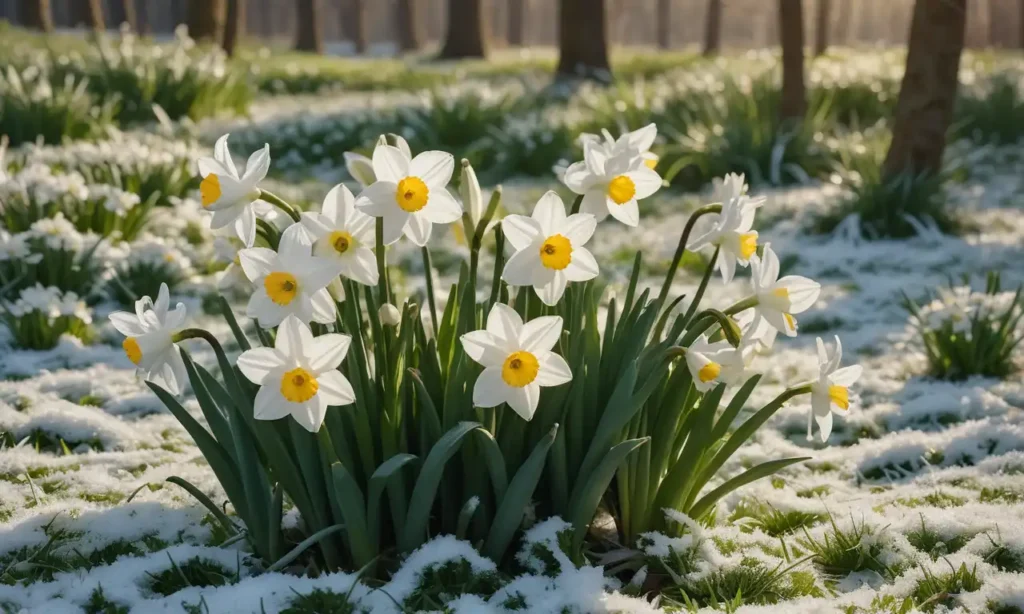
Narcissus, particularly paperwhites, became December birth flowers due to their remarkable ability to bloom indoors during winter. Originating in the Mediterranean, narcissus spread widely through trade and became popular in Europe for winter forcing during Victorian times. Their fragrant white blossoms brightened homes during Christmas and New Year, reinforcing their association with hope, purity, and renewal at the year’s close. The practice of forcing bulbs in bowls of pebbles and water made narcissus especially accessible, transforming them into symbols of seasonal cheer. Ancient Greeks and Romans admired the flower as well, linking it to myths of beauty and transformation. By the 19th century, cultivated paperwhites had become staples of European and American households, celebrated for their fragrance, elegance, and ability to defy winter’s gloom.
Symbolism and Meaning
Narcissus birth flower meanings encompass rebirth, inspiration, and new beginnings. Despite the Greek myth linking narcissus to vanity, most traditions emphasize positive qualities. White narcissus represents purity and innocence, while yellow conveys joy and optimism. Their winter blooming habit symbolizes triumph over adversity. In Chinese New Year traditions, narcissus is cultivated to ensure good fortune and prosperity. Victorians also embraced narcissus as a messenger of respect and admiration, making it a thoughtful gift during the cold months. Across cultures, the flower’s ability to flourish when little else grows has cemented its reputation as a beacon of hope and encouragement. Its delicate form coupled with strong fragrance creates a compelling balance, reinforcing the idea that resilience and beauty can coexist even in challenging times.
Characteristics and Growing Information
Narcissus includes daffodils, jonquils, and paperwhites. Paperwhites are the most associated with December, as they can bloom indoors without the cold period required by other types. When grown in shallow containers filled with pebbles and water, they produce clusters of fragrant blossoms on slender stems, often within a few weeks of planting. This ability to thrive indoors during winter makes narcissus an ideal counterpart to outdoor-growing holly. Paperwhites reach about twelve to sixteen inches tall, and their pure white flowers create striking displays when grouped together. They require bright light and moderate watering, thriving best in cool rooms that prolong blooming. Unlike other narcissus, they don’t naturalize outdoors in colder climates, so they are primarily enjoyed indoors as a seasonal display.
Modern Uses and Gift Ideas
Pre-planted paperwhite kits are popular December birthday gifts, providing weeks of blooms indoors. Their strong fragrance and delicate appearance bring brightness to winter interiors. Narcissus motifs also appear in holiday cards, ornaments, and seasonal décor, keeping their presence alive during the darker months. For many families, forcing paperwhite bulbs each December has become a cherished holiday tradition. Arrangements featuring blooming narcissus add elegance to holiday gatherings, often placed on dining tables or mantelpieces. Potted bulbs can also be passed along as meaningful gifts, symbolizing hope and prosperity at year’s end. Beyond seasonal displays, narcissus continues to inspire art and photography, with its graceful form and luminous petals celebrated in galleries, crafts, and personal projects, ensuring its cultural presence extends well beyond its brief bloom.
Holly Birth Flower – Evergreen Strength Through Darkest Days
History and Origins
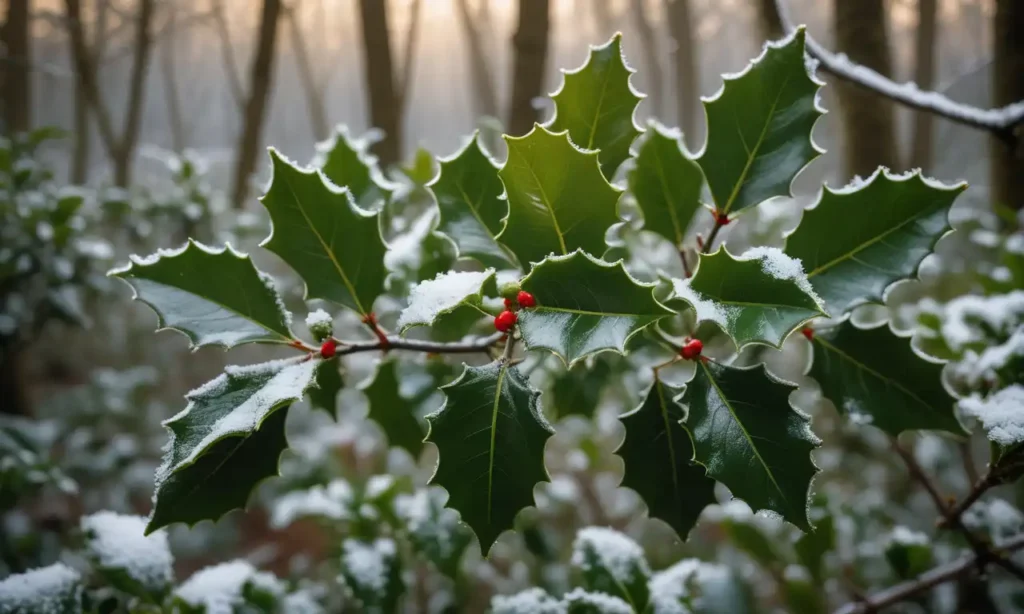
Holly (Ilex species) has deep roots in ancient traditions. Celts and Druids revered its evergreen leaves as symbols of protection and eternal life, believing holly could ward off evil spirits during the darkest days of winter. Romans incorporated holly into their Saturnalia celebrations, exchanging sprigs as tokens of goodwill. With the spread of Christianity, holly gained new symbolic associations, and folklore across Europe gave it an enduring role. Tales such as the battle between the Holly King and Oak King highlighted the eternal cycle of winter and summer, ensuring holly’s place in seasonal tradition. Across centuries, holly’s enduring greenery provided reassurance during long winters, offering communities both physical decoration and spiritual comfort at the year’s darkest turning point.
Symbolism and Meaning
The holly birth flower for December carries meanings of defense, domestic happiness, and foresight. Its evergreen presence in midwinter symbolizes life persisting through hardship, a reminder that vitality endures even during the darkest season. Different holly types convey various messages—variegated forms suggest uniqueness and individuality, while classic green symbolizes continuity and tradition. In folklore, holly was also thought to invite good fortune when brought into the home during winter festivities, making it a long-standing emblem of protection and prosperity. Celtic tradition designated holly as ruler of the waning year, representing wisdom gained through experience and the quiet strength needed to carry lessons forward into the new cycle. This symbolism made holly a reassuring presence, connecting families, communities, and rituals with continuity, resilience, and lasting hope through uncertain winters.
Characteristics and Growing Information
Holly encompasses hundreds of species, ranging from compact shrubs to towering trees. Foliage can vary widely, from spiny and glossy to smoother, softer forms. Most hollies are dioecious, meaning separate male and female plants are needed for reproduction. They thrive in partial shade to full sun with well-drained, slightly acidic soil. Growth is steady but slow, with many species maturing into long-lived specimens that endure for centuries, making them true legacy plants. Holly’s adaptability extends across climates, with some species tolerating cold northern winters while others flourish in warmer regions. Their dense structure provides shelter for wildlife, making them ecologically valuable as well as ornamental. Landscapers often use holly in hedges, borders, and specimen plantings to add year-round texture, color, and structural interest.
Modern Uses and Gift Ideas
Holly is inseparable from December celebrations. Fresh holly wreaths and festive arrangements remain popular seasonal gifts, while potted holly plants offer long-lasting greenery that can grow for generations. Beyond decoration, holly is valued as a wildlife plant—its dense foliage provides shelter for birds during the cold months. As a December birth month flower, holly symbolizes continuity and enduring beauty during winter’s quiet season. Cultural traditions have further cemented holly’s role in December, with carols, literature, and artwork frequently portraying its glossy leaves as emblems of hope and resilience. In modern gifting, holly-themed ornaments, jewelry, and greeting cards extend its symbolism beyond the garden, ensuring December birthdays feel connected to both festive celebrations and timeless seasonal heritage.
Wrapping Up
The December birth flower tradition provides those born at year’s end with two blooms that balance strength and grace. Holly offers evergreen endurance and protection, symbolizing life’s persistence through hardship, while narcissus brings beauty and renewal, proving that flowers can bloom even in winter. Together, they give December babies a rich floral heritage perfectly suited to the season of reflection and hope.
The December birth flower tradition provides those born at year’s end with two blooms that balance strength and grace. Holly offers evergreen endurance and protection, symbolizing life’s persistence through hardship, while narcissus brings beauty and renewal, proving that flowers can bloom even in winter. Together, they give December babies a rich floral heritage perfectly suited to the season of reflection and hope.
The enduring presence of holly and the delicate resilience of narcissus also make them symbols that move beyond birthdays. They capture the broader spirit of December itself—a month that closes one chapter and opens another. Whether decorating homes for festive gatherings or blooming quietly indoors, these December flower choices remind us that even in the coldest and darkest days, signs of renewal and continuity are always present. In this way, the December flower of the month reflects both timeless tradition and personal celebration, keeping the birth flowers of December relevant for generations. For many, the dec birth flower pairing of holly and narcissus is more than symbolic—it’s a living reminder that resilience and renewal go hand in hand.
Interested in the January Birth Flowers? Check out January Birth Flowers: Discover the Beautiful Carnation and Snowdrop!
Frequently Asked Questions
Q: Why do paperwhites bloom indoors in winter?
A: Unlike most narcissus varieties that need a chilling period, paperwhites bloom naturally indoors. Planted in shallow containers with soil or pebbles, they flower within weeks, making them perfect for December displays.
Q: Can holly be grown in containers?
A: Yes. Dwarf holly varieties adapt well to pots if they have good drainage and occasional feeding. In colder regions, protect the roots by insulating containers or moving them to a sheltered spot.
Q: What makes December’s two birth flowers unique together?
A: Holly represents outdoor strength and endurance, while narcissus offers indoor beauty and renewal. Their pairing reflects December’s balance of resilience and hope, giving those born this month a meaningful floral tradition.